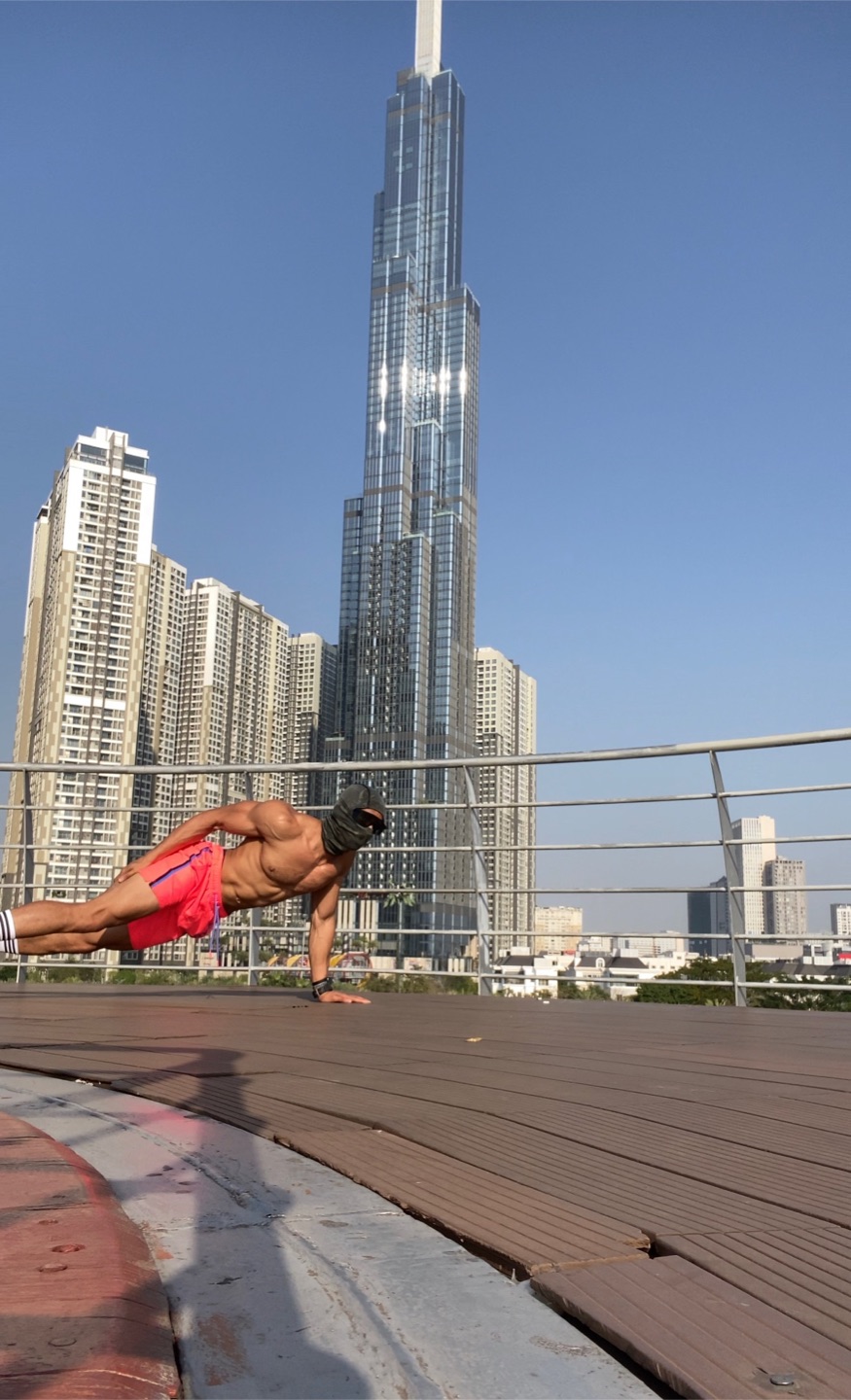
Towers. Rooftop decks. Ridgelines above cloud level. Pool edges at night. Look across the visual record and a question presents itself: why these grounds? The answer the frames give is not scenic. It is practical. Every one of these surfaces shares a single property — it demands attention, continuously, from the first second to the last.
Elevated Ground
A tower deck gives nothing away for free. Wind moves through it. Edges are real. Footing varies tile to tile. On elevated ground, careless placement has visible consequences, so every step is placed rather than assumed. The footage shot in these locations shows it: movement that stays compact, deliberate, exact. The ground is not a backdrop. It is a participant.
Mountain Ground
The Chiang Mai material made the same argument at altitude. Above the cloud line the surface itself is uneven, the air thinner, the drop-offs honest about what they are. Nothing about a ridgeline invites distraction, and the film records movement adjusted accordingly — smaller margins, full attention, no wasted steps.
Water's Edge
The Bangkok films added water to the inventory. A pool edge imposes terms no floor ever will: it refuses stability, punishes haste, resets the conversation between balance and surface. Water cannot be argued with, only worked with. As training ground it enforces the same discipline a high deck does, by different means.
The Common Denominator
Set side by side, these choices stop looking like variety for its own sake. They look like a filter. Flat, predictable, forgiving ground does not appear in the record, and the absence is legible. What appears instead is always ground with stakes — height, instability, texture, exposure. Surfaces that ask something back.
The observable conclusion is simple: the practice selects environments that keep attention switched on, because a session performed on demanding ground is checked against reality every second. The location is never decoration. Choosing the ground is part of the training.